
The Holistic Wall of Knowledge: How a Child’s Education Truly Begins at Conception
Imagine your child’s first classroom isn’t a desk or a playmat—it’s the womb.
The conventional wisdom of Early Childhood Care and Education (ECCE) defines “early” as the period from a child’s birth to age eight (UNESCO, 2010; UNICEF, 2023). This framework, while well-intentioned, overlooks a fundamental truth: a child is not born as a blank slate. They are born as a nine-month-old individual with a rich history of learning, emotion, and sensory experiences.
This prenatal period is where a child begins to build their Holistic Wall of Knowledge, brick by psychomotor, cognitive, and affective brick. As outlined in The Tricycle Model, each part of learning contributes to a balanced foundation, and modern science confirms that if this wall is laid poorly, the consequences can last a lifetime
The Prenatal Classroom: A World of Active Learning
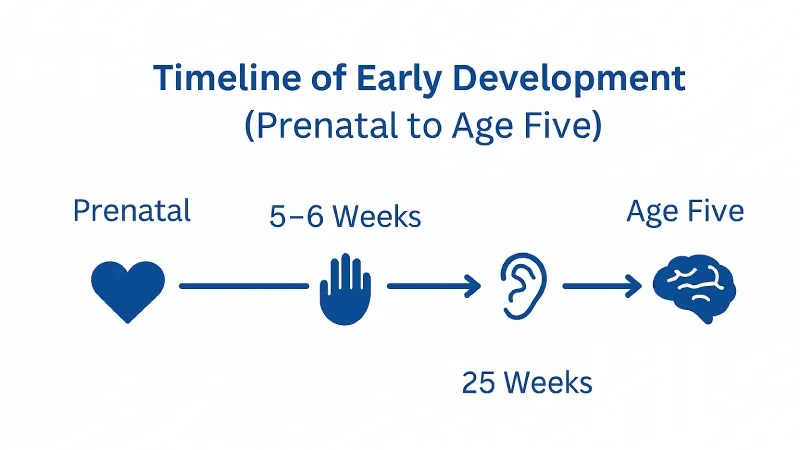
Long before a child takes their first breath, they are an active, responsive learner. Our philosophy proposes that a child’s development follows a natural sequence mirroring the biological order of their most vital systems. If you’d like to explore how this philosophy shapes our work, you can contact us to learn more. It begins with the affective domain (the heart), followed by the psychomotor domain (the nervous system), and culminates in the cognitive domain (the brain
This is not presented as a rigid, linear timeline, but as a philosophical framework for understanding how a child’s holistic development unfolds from the inside out, establishing connection before motion, and motion before complex thought.
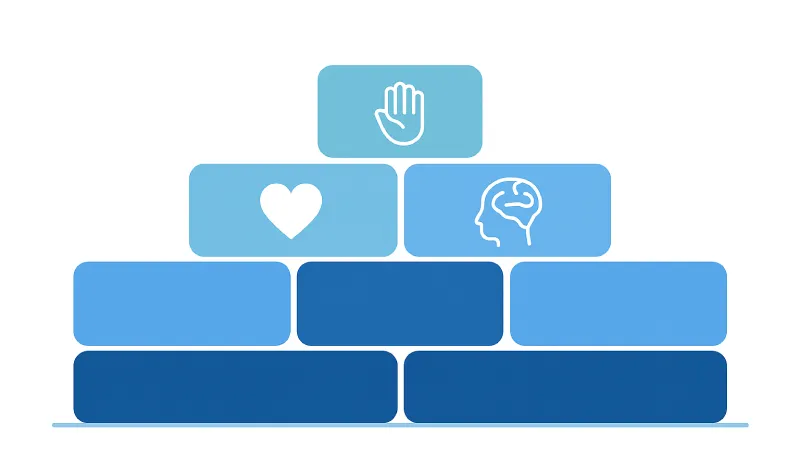
The Affective Domain: Emotional Development Begins in the Womb
The affective domain, the foundation for emotional and relational development, is the first to be built. It begins with the formation of the heart, establishing a rhythm of connection that grounds a child’s entire being.
- Emotional Responses: Studies using 4D ultrasound have provided groundbreaking evidence that a fetus is capable of a physical, emotional response. Research from a 2022 study at Durham University captured fetal facial expressions that resembled “laughter-face” in response to sweet carrot flavours and “cry-face” expressions when exposed to bitter kale. This demonstrates that a fetus is not a passive entity but an active participant in its own emotional world.
- A Sense of Comfort: A fetus’s hearing system is functional by 20 to 22 weeks of gestation. A mother’s voice is particularly salient, as it is transmitted internally through bone conduction, making it a constant, reassuring presence. When a fetus hears its mother’s voice, its heart rate and motor movements can slow down, indicating a sense of comfort and recognition. This is the very first brick of the affective domain.
The Psychomotor Domain: The First Movements of Life
Following the initial development of the heart, the foundation of the physical self is built with the first movements. This process is far more intentional than simple reflexes.
- From Twitches to Purpose: As early as seven to eight weeks of gestation, a fetus makes its first tiny twitches in the spinal cord, signalling the beginning of a cascade of physical development. By nine weeks, it is capable of whole-body movements. These movements are essential for developing the sensorimotor system, preparing the child for a life of interaction and exploration.
- Early Self-Regulation: By the end of the first trimester, a fetus makes sucking motions, brings its hands to its face, and grasps the umbilical cord. This tactile exploration is a critical part of developing body awareness and building the physical skills that will be needed to regulate and navigate the world after birth.
Imagine your child’s first classroom isn’t a desk or a playmat—it’s the womb.
The conventional wisdom of Early Childhood Care and Education (ECCE) defines “early” as the period from a child’s birth to age eight (UNESCO, 2010; UNICEF, 2023). This framework, while well-intentioned, overlooks a fundamental truth: a child is not born as a blank slate. They are born as a nine-month-old individual with a rich history of learning, emotion, and sensory experiences.
This prenatal period is where a child begins to build their “Holistic Wall of Knowledge,” brick by psychomotor, cognitive, and affective brick. This report synthesizes modern science to reveal that if this foundation is laid poorly, the consequences can last a lifetime.
The Cognitive Domain: The Awakening of the Mind
The cognitive domain—the ability to learn, remember, and process information—comes last, building upon the foundation laid by the affective and psychomotor domains. The fetus’s brain is not idle; it is actively processing and adapting to its environment.
- Sensory Memory: A fetus can form and retain memories based on repeated sensory input. Research shows that flavours from a mother’s diet, such as garlic, carrot, or anise, are transferred to the amniotic fluid, and repeated exposure can influence a child’s food preferences for months and even years after birth. This “taste imprinting” is a clear example of prenatal learning.
- Habituation: A fetus demonstrates a primitive form of learning called habituation, which is the ability to recognise and stop responding to a repeated, non-threatening stimulus. For example, a fetus’s startle response to a loud noise will diminish over time. This is a clear sign of a functioning memory system that is actively processing its environment.
The Science of Fetal Programming: Building the Wall in a World of Stress
The concept of a “wobbly wall” with “missing bricks” is a powerful metaphor for a phenomenon that modern science calls fetal programming or the Developmental Origins of Health and Disease (DOHaD) hypothesis. This theory states that a fetus’s adaptations to its intrauterine environment can lead to permanent structural and functional changes, which may predispose them to health and developmental challenges later in life.
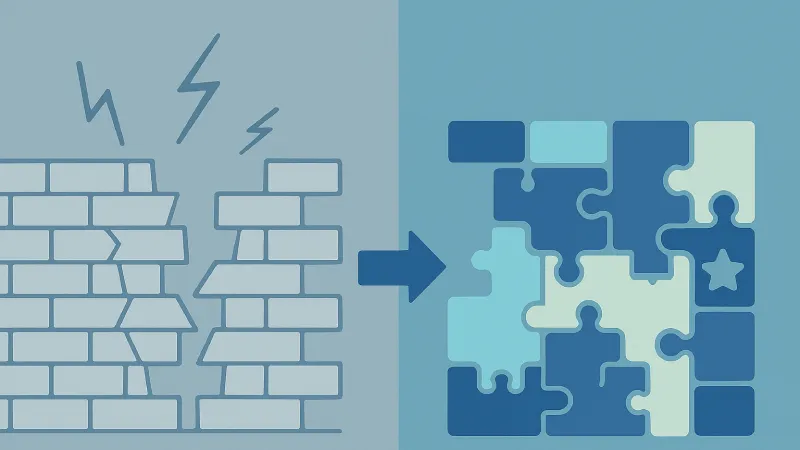
Epigenetics and the Wobbly Wall
A key mechanism behind this is epigenetics—the study of how environmental factors can change how genes are expressed without altering the DNA sequence itself. When a mother experiences significant stress or has poor nutrition, these factors can trigger epigenetic changes that alter a child’s neurological development and influence their lifelong health.
The impact of this is not distributed equally. A 2021 study found that lower parental socioeconomic status (SES) during pregnancy was associated with altered fetal brain development, including decreased regional brain growth. The study suggests this may be explained by elevated parental stress, which is often amplified in underserved communities. This adds a critical dimension of social equity to the prenatal narrative, revealing that the strength of a child’s foundation can be influenced by systemic factors that exist long before they are born.
Note: These findings are based on emerging 2023–2025 research. While promising, further studies are needed to confirm long-term impacts.
| Domain | Onset (Gestation) | Key Prenatal Experiences | Long-Term Impact |
|---|---|---|---|
| Affective | Heartbeat at ~5–6 weeks | Mother’s voice, taste, and emotions | Emotional regulation, social bonding, resilience |
| Psychomotor | Twitches at ~7–8 weeks | Movement, grasping, thumb-sucking | Motor skills, coordination, body awareness |
| Cognitive | Habituation at ~25 weeks | Sound, flavour, and sensory recognition | Memory, language, food preferences |
The Post-Birth Transition: When the Wall Wobbles
A child’s brain is only about a quarter of its adult size at birth, but it grows to 90% of its adult size by age five. This is a period of explosive growth, where over one million new neural connections are formed every second. The quality of a child’s experiences—positive or negative—shapes this brain architecture.
A child who has been nurtured in the womb is not a blank slate. They arrive with an internal “body clock” and a set of sensory memories that are immediately disrupted by the outside world. When parents prioritise a rigid schedule of feeding and sleeping over responding to a child’s cues—an act of “forcing”—the foundational bricks of the affective domain can begin to wobble.
Instead of a learning environment built on love, respect, and trust, the child may internalise stress, dysregulation, and insecurity. These negative experiences are actively shaping the child’s brain, laying a “fragile foundation” for all future cognitive, emotional, and social capacities
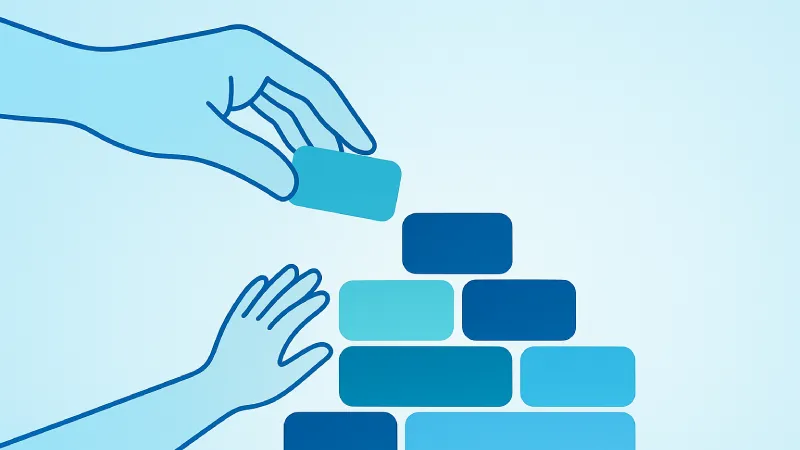
The Missing Bricks and the Neurodiversity Lens
This fragile foundation has a monumental impact. A child whose wall is “wobbly” cannot easily support the academic “bricks” of maths, science, and history. The struggle is not a personal failure but a symptom of an unstable foundation.
This is the very reason why a child may later be identified with Special Educational Needs and Disabilities (SEND). Our philosophy does not see SEND as a label for a child’s deficits, but as a manifestation of a different kind of Wall of Knowledge—a neurodiverse wall that needs tailored support, not a one-size-fits-all approach. The neurodiversity paradigm asserts that atypical neurological development is a normal human variation that should be recognised and respected.
The missing bricks are a direct result of environmental factors:
Maternal Stress:
A child exposed to high maternal stress in the womb may suffer from lower cognitive and language abilities, as well as behavioural and emotional dysregulation later in life.
Maternal Malnutrition:
Maternal malnutrition during pregnancy can significantly impair fetal brain development, leading to a reduction in brain size and nerve cell number. These impairments can have “lifetime effects on offspring,” including a lower IQ and a predisposition to behavioural problems.
Prenatal Substance Exposure:
The most direct and devastating examples of missing bricks come from prenatal alcohol exposure, which is a known cause of conditions associated with a range of permanent intellectual disabilities, learning problems, poor memory, attention deficits, and behavioural issues (CDC, 2023).
Case Study: A Tale of Two Children
Imagine two expectant mothers, Sarah and Omar. Sarah, due to financial and family pressures, experiences high levels of stress throughout her pregnancy. This constant state of stress, as research shows, is linked to elevated cortisol levels, which can impair a child’s neurological development.
In contrast, Omar’s mother actively manages her well-being by using a prenatal bonding app that guides her through calming exercises. This approach has been shown to reduce anxiety and improve emotional well-being.
After birth, Sarah’s child struggles with emotional regulation and attention, behaviours that may be a direct result of their prenatal environment. Omar’s child, having had a more nurturing experience, is more easily soothed and engaged. This demonstrates that a child’s Wall of Knowledge begins building in the womb, and that proactive steps to reduce stress and foster connection can have a profound impact on a child’s future.
Here are a few actionable tips for expectant parents:
- Conscious Communication: Talk to your baby in a calm, soothing voice. Read books, sing songs, and speak to them about your day. This not only builds a neural network for language but also lays the foundation for a deep emotional bond.
- Prioritise Well-Being: A mother’s mental health is paramount. Use mindfulness and meditation apps designed for expectant mothers, such as Expectful or Smiling Mind, which have been shown to reduce anxiety and improve emotional well-being.
- Engage in Conscious Nutrition: A nutritious diet is crucial, as is exposing your child to a variety of healthy flavours. As research shows, this can lead to healthier eating habits after birth.
- Stay Present: Avoid the temptation to plan a rigid post-birth schedule. Instead, focus on building the [love, respect, and trust] that will be the three wheels of your educational journey together.
References
Barker, D. J. P. (1990). The fetal origins of adult disease. British Medical Journal, 301(6761), 1111. https://doi.org/10.1136/bmj.301.6761.1111
Ustun-Elayan, B., et al. (2022). First direct evidence that babies react to taste and smell in the womb. EurekAlert! https://www.eurekalert.org/news-releases/965259
Kisilevsky, B. S., et al. (2009). The impact of maternal voice on the fetus. Infant Behavior and Development, 32(1), 1–11. https://doi.org/10.1016/j.infbeh.2008.08.005
Lecanuet, J. P., & Schaal, B. (2020). Prenatal sensory development. In The Cambridge Encyclopedia of Child Development. Cambridge University Press.
Mennella, J. A., et al. (2001). Prenatal and postnatal flavor learning by human infants. Pediatrics, 107(4), e37. https://doi.org/10.1542/peds.107.4.e37
Einspieler, C., et al. (2021). Fetal movements: The origin of human motor behaviour. Journal of Perinatal Medicine, 49(1), 1–13. https://doi.org/10.1515/jpm-2020-0442
Feldman, R., & Masalha, L. (2020). The effects of prenatal stress on child development. Frontiers in Psychology, 11, 2179. https://doi.org/10.3389/fpsyg.2019.02179
Wu, J., et al. (2024). Epigenetics of prenatal stress in humans: The current research landscape. Molecular Psychiatry, 29(4), 1147–1160. https://doi.org/10.1038/s41380-023-02400-0
Limperopoulos, C., et al. (2021). Low parental socioeconomic status during pregnancy alters early fetal brain development. Children’s National Hospital. https://www.childrensnational.org/about-us/newsroom/2021/low-parental-socioeconomic-status-during-pregnancy-alters-early-fetal-brain-development
Shonkoff, J. P. (2011). Protecting a child’s brain from the lifelong consequences of toxic stress. American Journal of Preventive Medicine, 41(6 Suppl 3), S228–S236. https://doi.org/10.1016/j.amepre.2011.09.008
Spahn, A., et al. (2024). Fetal and neonatal nutrition in the prevention of neurodevelopmental disorders. Annual Review of Nutrition, 44(1), 1–20. https://doi.org/10.1146/annurev-nutr-012323-010531
Chapman, R. (2023). Neurodivergence-informed therapy. Developmental Medicine & Child Neurology, 65(3), 310–317. https://doi.org/10.1111/dmcn.15384
I really enjoyed reading this blog about the Wall of Knowledge. It helped me understand how learning starts before birth and continues step by step. The examples were very clear, and I feel more confident about this idea now. Thank you for sharing this knowledge.
Thank you, Muneeba I’m glad the step-by-step approach made the Wall of Knowledge clearer. Your reflection shows how powerful it is when we connect learning with real life from the very beginning.
This is such an insightful piece! I never realized how early taste preferences begin forming in the womb. It’s amazing to know that a mother’s healthy and varied diet can actually shape her child’s eating habits for life. Thank you for highlighting the importance of prenatal nutrition in such a simple and practical way.
Appreciate your thoughtful comment, Faiza Prenatal nutrition is often overlooked, yet it quietly shapes lifelong habits. Your takeaway about a mother’s diet influencing her child’s health is exactly the awareness we hope to spread.
I have read the blog, This blog beautifully highlights the critical importance of early childhood care and development right from conception through the first eight years of life. The explanation is clear, evidence-based, and emphasizes how these formative years lay the foundation for lifelong learning, health, and well-being.
I truly appreciate the depth of content and the way it connects theory with practical understanding—an insightful reminder for parents, educators, and policymakers alike.
So pleased you found value in the depth of the blog, Sukaynah Linking theory to practice—and ensuring it supports parents, educators, and policymakers—is at the heart of holistic education. Thank you for recognising that.
This blog gave me a whole new perspective on how a child’s learning begins even before birth. I found the examples very clear and relatable.
This blog gave me a whole new perspective on how a child’s learning begins even before birth. I realised that the environment, relationships, and even the stories a family shares all shape the child’s early ‘wall of knowledge.’ The examples in the blog were very clear and relatable — it helped me see how the affective, psychomotor, and cognitive wheels connect right from the earliest stages. As a student teacher, it made me reflect on how I can value what children already bring with them, rather than only focusing on what I plan to teach.
“Thank you for sharing this — I’m so glad the blog helped you see learning as something that begins even before birth. Your reflection captures the heart of the Wall of Knowledge beautifully, and it’s inspiring to see you already thinking about valuing what children bring with them.
This blog beautifully highlights the critical importance of early childhood care and development. It provides a clear, evidence-based explanation of how the first eight years of life lay the foundation for a person’s lifelong learning, health, and well-being. I appreciate how it connects theory with practical understanding—a powerful and insightful read for anyone involved in a child’s life.
This is a fascinating overview! It’s amazing to think about how much development happens from the very beginning.Understanding these stages is so important for supporting children’s growth.Thank you for breaking it down so clearly! 🙌🏼
This blog is very informative as it highlights the timeline of early development so well.Its amazing to think about how much development happens from the very beginning.Understanding these stages is so crucial for supporting children’s growth.
Thank you for breaking it down so clearly! 🙌🏼