
5 Innovative Approaches to Enhance Social-Emotional Learning in 2025
Introduction
As an educator with over two decades of experience in inclusive teaching, SEND, and early childhood education, I, Dr. Farida Sheikh, am thrilled to share my insights on social-emotional learning (SEL) for 2025. This blog dives into five innovative approaches designed to strengthen SEL—a critical component of emotional well-being and classroom inclusion. SEL equips students with skills like self-awareness, empathy, and resilience, which are essential for thriving in diverse learning environments. Drawing on evidence-based practices, real-world applications, and my extensive work with educators and parents, this expanded post (over 800 words) offers actionable strategies to empower both students and teachers. Let’s explore how these methods can transform education this year.
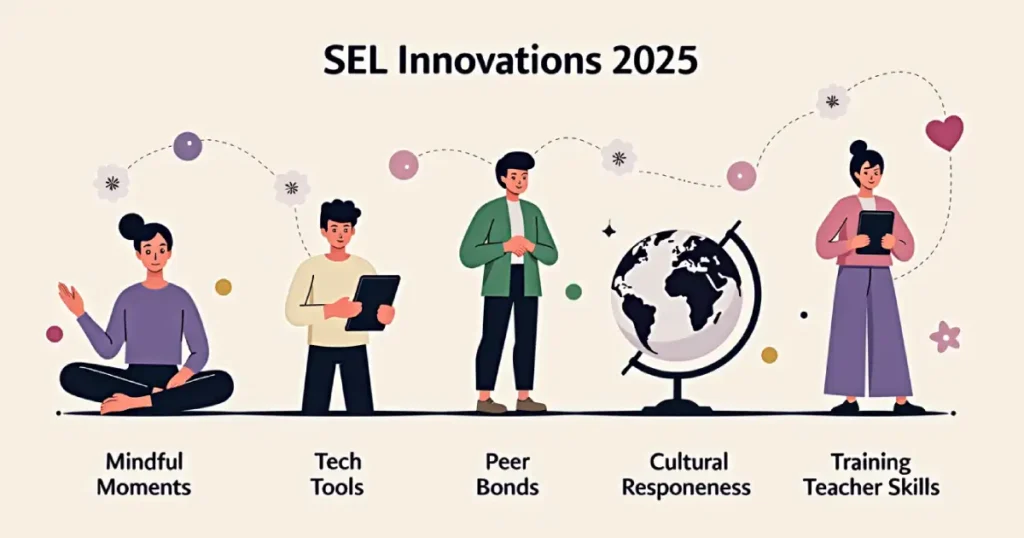
Approach 1: Integrating Mindfulness Practices
Mindfulness is a powerful tool to enhance social-emotional learning by fostering self-awareness, reducing anxiety, and improving focus. In today’s fast-paced classrooms, students face increasing stress, making this practice more relevant than ever.
- How to Implement: Introduce short, daily mindfulness sessions—such as 5-minute guided meditations or breathing exercises—tailored to different age groups. Teachers can use scripts or apps to guide students through these activities, creating a calm start to the day.
- Benefits: A UK-based study conducted in 2024 found that students participating in regular mindfulness exercises showed a 20% improvement in concentration and a 15% reduction in reported stress levels. This supports emotional regulation, a core SEL skill.
- Practical Tips: Pair mindfulness with reflective journals where students can note their feelings, deepening their emotional understanding. Encourage teachers to model these practices, creating a shared classroom culture of calm.
- Expansion: Schools can also integrate mindfulness breaks during transitions between subjects, helping students reset and re-engage. Training staff to lead these sessions ensures consistency and effectiveness.
Approach 2: Leveraging Technology for SEL
Technology offers innovative ways to personalize social-emotional learning, providing interactive platforms that build empathy, resilience, and communication skills. In 2025, digital tools are becoming indispensable for modern education.
- How to Implement: Incorporate apps like Calm, Headspace for Educators, or SEL-specific games that teach emotional recognition through interactive scenarios. These tools can be used in group settings or individually, depending on student needs.
- Benefits: The National Association of School Psychologists reports a 15% increase in emotional regulation among students using tech-based SEL programs. This data, gathered from diverse classrooms, underscores the potential of digital learning.
- Source: Learn more about these findings at the National Association of School Psychologists
- Practical Tips: Set up a dedicated SEL tech corner in the classroom where students can explore these resources. Regular feedback sessions can help adjust the tools to suit different learning styles.
- Expansion: Schools can collaborate with ed-tech companies to pilot new SEL software, ensuring access to cutting-edge resources. Parental involvement, through home access to these tools, can further reinforce learning.
Approach 3: Peer Support Networks
Peer-led support networks are a dynamic way to enhance social-emotional learning by fostering collaboration, empathy, and a sense of belonging among students. This approach leverages the natural social dynamics of the classroom.
- How to Implement: Establish buddy systems or peer mentoring programs where older or more confident students guide younger peers. Schools can hold monthly meetings to facilitate these connections.
- Benefits: A Toronto school implemented a peer support initiative in 2024, reporting stronger classroom cohesion and a 10% decrease in bullying incidents. This highlights the social benefits of peer interaction.
- Insight: One teacher noted that students felt more included, boosting their emotional well-being and willingness to participate.
- Practical Tips: Train peer leaders with basic conflict resolution skills to ensure positive interactions. Celebrate peer successes with small rewards to encourage participation.
- Expansion: Extend this model to extracurricular activities, such as peer-led art or sports groups, to build community beyond the classroom. Regular evaluations can refine the program over time.
Approach 4: Culturally Responsive SEL Curriculum
A culturally responsive SEL curriculum respects students’ diverse backgrounds, enhancing social-emotional learning by promoting inclusion and cultural context. This approach ensures every student feels valued.
- How to Implement: Design lessons that incorporate stories, traditions, or activities from students’ cultures. For example, use storytelling sessions featuring diverse narratives or host cultural celebration days.
- Benefits: This method improves emotional well-being by fostering a sense of belonging, a key SEL outcome. Students from underrepresented groups show higher engagement when their heritage is acknowledged.
- Practical Tips: Involve families by inviting them to share cultural insights, creating a bridge between home and school. Use multicultural resources to enrich lesson plans.
- Expansion: Partner with community organizations to provide cultural training for teachers, ensuring authenticity and depth. Regular feedback from students can help tailor the curriculum to their needs.
Approach 5: Teacher Training in Emotional Literacy
Teachers who are skilled in emotional literacy can model and support social-emotional learning effectively, creating a ripple effect in the classroom. In 2025, this training is more critical than ever.
- How to Implement: Offer CPD workshops focusing on emotional literacy, conflict resolution, and recognizing student emotions. These can be delivered online or in-person, catering to different schedules.
- Benefits: Teachers who underwent SEL training reported a 30% increase in student engagement, according to a 2024 survey by the Education Endowment Foundation. This reflects the power of teacher-led SEL.
- Internal Link: Discover our tailored CPD Courses to enhance your SEL skills.
- Practical Tips: Include role-playing exercises to practice emotional responses and provide ongoing coaching to reinforce learning.
- Expansion: Establish a teacher SEL community where educators can share experiences and strategies, fostering a supportive network. Annual refresher courses can keep skills sharp.
Conclusion
The five innovative approaches to enhance social-emotional learning in 2025—mindfulness practices, technology integration, peer support networks, culturally responsive curricula, and teacher training—offer a comprehensive framework to support emotional well-being and inclusion. As an educator committed to evidence-based solutions, I’ve seen these strategies transform classrooms. My work, including the Tricycle Model, provides additional tools to implement these ideas effectively. By adopting these methods, schools can create nurturing environments where every student thrives.
Call to Action
Discover how to implement these SEL approaches with our expert resources. Explore the Tricycle Model today