
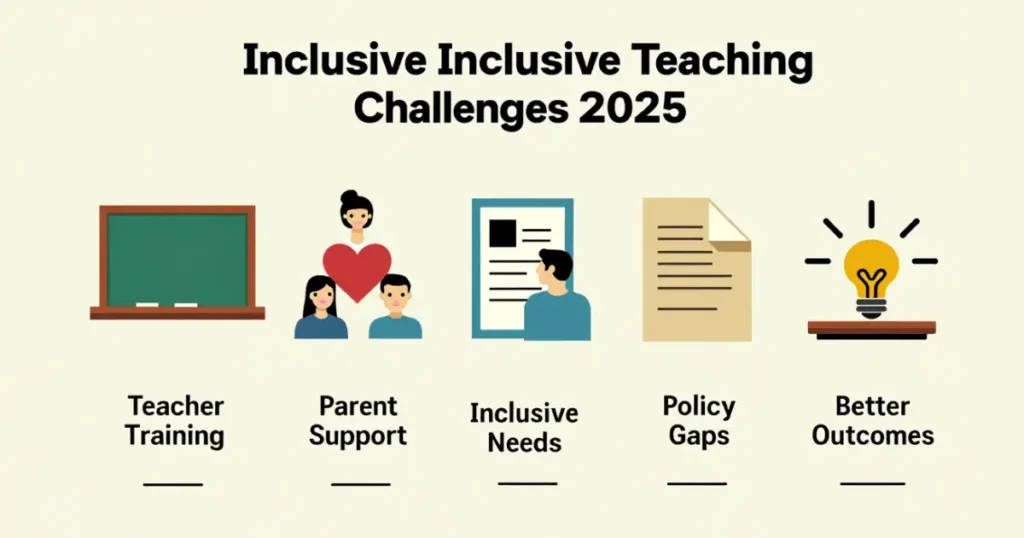
5 Urgent Challenges Facing Inclusive Teaching Strategies in 2025
Introduction
As an experienced educator specialising in inclusive teaching strategies, SEND, and early childhood education, I, Dr. Farida Sheikh, am passionate about supporting diverse learners. I’m addressing the urgent challenges facing inclusive teaching strategies in 2025. This approach, which integrates cultural context, emotional well-being, and inclusion, is vital for modern classrooms. This blog, now expanded with deeper insights, explores five key issues and offers actionable solutions grounded in evidence and real-world experiences to empower educators and parents alike.
Challenge 1: Inadequate Teacher Training
Many teachers lack specialized training in inclusive teaching strategies, making it hard to adapt to diverse classrooms. Without skills in cultural context or differentiation, they struggle to support SEND students or address emotional well-being, leaving gaps in inclusion efforts.
- Solution: Schools should invest in comprehensive CPD programs. These should focus on inclusive methods, emotional intelligence, and practical differentiation techniques. Partnering with education experts can provide hands-on workshops, ensuring teachers feel confident in their abilities.
- Insight: A London primary school reported a 25% increase in student participation after a year-long inclusive training program, highlighting the power of targeted development.
- Regular follow-up sessions and peer mentoring can sustain these skills, creating a culture of continuous learning.
Challenge 2: Low Parental Involvement
Inclusive teaching strategies thrive on teacher-parent collaboration, but busy schedules and limited awareness hinder engagement. This affects emotional well-being and inclusion, as parents miss opportunities to reinforce learning at home.
- Solution: Offer accessible online workshops and free downloadable guides to bridge this gap. Encourage regular communication through emails or apps, fostering a supportive home-school partnership. Schools can also host virtual Q&A sessions to address parental concerns.
- Source: UNESCO notes a 20% academic boost with active parental support, underscoring its importance.
- Creating parent-led support groups can further strengthen community ties, offering a platform for shared experiences.
Challenge 3: Policy and Resource Shortages
Inconsistent policies and inadequate funding pose significant barriers to inclusive teaching strategies. Without resources to integrate cultural context or support diverse needs, schools face inequities that undermine inclusion efforts.
- Solution: Advocate for policy reforms with education authorities, emphasizing the need for sustained funding. Collaborate with local governments to prioritize inclusive programs, securing grants for materials and training.
- Source: OECD identifies funding as a critical barrier, with many schools lacking basic tools.
- Engaging community stakeholders in fundraising efforts can supplement public resources, ensuring long-term sustainability.
Challenge 4: Meeting Diverse Learning Needs
Inclusive teaching strategies must address SEND and multicultural students, but resource gaps and untrained staff challenge implementation. This affects cultural context and emotional well-being, leaving some learners behind.
- Solution: Develop flexible curricula and leverage technology, such as AI-driven learning platforms, to personalize education. Train staff to recognize individual needs, using assessments to tailor support for each student.
- Insight: A Toronto parent shared that their SEND child excelled with a customized inclusive plan from our workshops, proving the value of personalization.
- Expansion: Incorporating peer buddy systems can also foster inclusion, allowing students to learn from each other while building empathy.
Challenge 5: Evaluating Inclusive Success
Measuring the impact of inclusive teaching strategies on emotional well-being and inclusion is challenging. Stakeholders need clear evidence, but traditional metrics often miss qualitative growth, complicating advocacy.
- Solution: Combine qualitative feedback, like student well-being surveys, with traditional assessments. Share success stories and case studies to build trust and demonstrate value to administrators.
- Assessment Tools: Use tools like mood trackers or reflective journals to gauge emotional progress, aligning with inclusive teaching strategies goals. Regular reviews with parents can enhance accuracy.
- Expansion: Creating a digital dashboard for schools to track progress can provide real-time data, making it easier to showcase outcomes to policymakers.
Conclusion
The challenges facing inclusive teaching strategies in 2025 require a united effort from educators, parents, and policymakers. By enhancing training, boosting parental involvement, securing policy support, meeting diverse needs, and evaluating success, we can build inclusive, thriving classrooms. My work, including the Tricycle Model https://staging.faridasheikh.com/the-tricycle-model, offers evidence-based tools to navigate these issues, empowering every learner to succeed.
Call to Action
Learn more about our inclusive teaching model and how it supports evidence-informed education. Explore the Tricycle Model today: https://staging.faridasheikh.com/the-tricycle-model.